SUMMARY AI chatbots sound like lawyers. They are not. They have no license, no malpractice coverage and no ethical obligations to you. Research shows general-purpose AI tools hallucinate on legal questions between 58% and 88% of the time. Courts have sanctioned attorneys who trusted them blindly. Use AI to get oriented, not to make decisions. When the stakes are real, consult a licensed attorney.
What AI Legal Tools Cannot Tell You
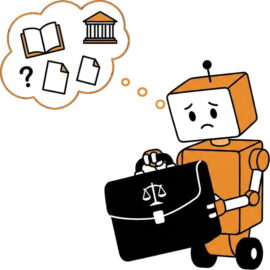
You have a legal problem. Maybe a vendor has not paid you, a landlord is ignoring a serious repair issue, a business partner is doing something that looks wrong or an employer is asking you to sign something you do not understand. You open an AI chatbot, describe your situation and within seconds you get a confident, detailed, well-organized response that sounds exactly like legal advice.
It is not. And the gap between what it sounds like and what it actually is could cost you significantly.
The Rule AI Tools Are Already Breaking
Every state prohibits the unauthorized practice of law. The rule exists for a reason that has nothing to do with protecting lawyers from competition. It exists because applying the law to someone’s specific facts and telling them what to do is a consequential act. Get it wrong and people lose cases they should have won, sign documents they should not have signed, miss deadlines that cannot be recovered and waive rights they did not know they had.
Licensed attorneys carry malpractice insurance. They answer to state bar disciplinary authorities. They owe clients enforceable duties of loyalty, competence and confidentiality. When a lawyer gets it wrong, there is a system of accountability. When an AI tool gets it wrong, you agreed to the terms of service, which almost certainly disclaim any responsibility for the accuracy of the output.
The legal distinction that matters here is between legal information and legal advice. A government website that explains how landlord-tenant law works in your state is providing information. An AI tool that reviews the facts you described, tells you that your landlord violated the warranty of habitability and advises you to withhold rent is providing legal advice tailored to your situation. That is the practice of law. The fact that the entity dispensing it runs on a server rather than a law license does not change the analysis. The ABA Model Rule 5.5 governs unauthorized practice of law, and bar associations across the country are actively debating how it applies to AI tools.
The Confidence Problem
The most dangerous thing about AI legal tools is not that they are wrong. It is that they are wrong with complete confidence and no way for you to know the difference.
In 2023, two licensed attorneys submitted a legal brief to a federal court in New York citing cases that supported their argument. The cases did not exist. ChatGPT had invented them, complete with realistic-sounding citations, and the attorneys filed the brief without verifying a single one. Judge P. Kevin Castel fined each attorney $5,000 in the case known as Mata v. Avianca, the first widely reported instance of AI-hallucinated case law reaching a federal court. U.S. District Judge Brantley Starr of the Northern District of Texas responded by requiring attorneys in his court to certify that any AI-drafted content had been verified by a human being before filing.
Think about that. Trained lawyers with years of legal education, professional obligations and reputations on the line got burned that badly. Now consider what happens to someone with no legal training who reads the same kind of output and has no way to evaluate whether it is accurate. The AI sounded authoritative. It always does. That is precisely the problem.
The data behind this is alarming. A 2024 study from Yale and Stanford researchers titled “Large Legal Fictions” tested general-purpose AI models on more than 800,000 verifiable legal questions and found hallucination rates between 58% and 88%. Even specialized legal AI tools built by major legal research companies hallucinated at rates of 17% to 43% in follow-up Stanford testing. One in six answers wrong at best. Nearly nine in ten at worst. These are not acceptable error rates for decisions that affect your rights, your money or your business.
Legal analysis is also jurisdiction-specific, fact-specific and constantly changing. A contract clause that is enforceable in Texas may be void in New Jersey. A deadline that applies in federal court may be different in state court. An employment law that protected you last year may have been amended. AI tools are particularly prone to presenting outdated or inapplicable information as though it were settled fact.
What AI Tools Can’t Do That Lawyers Can
AI tools cannot ask you the follow-up questions that change the entire analysis. Lawyers know that the first version of a client’s story is rarely complete and that the details that come out in conversation often determine the outcome. An AI tool takes what you give it and runs with it. If you left out something important, it does not know to ask.
AI tools cannot assess credibility, evaluate the other side’s likely strategy or make judgment calls about risk tolerance. Legal decisions are rarely purely legal. They involve business relationships, personal circumstances, financial exposure and the likelihood that the other party will actually do what they are threatening. Lawyers weigh all of that. AI tools give you the textbook answer.
AI tools cannot protect your confidential information. When you describe your legal problem to an AI chatbot, you are typically feeding that information into a system whose data practices you did not review and whose terms of service you clicked through without reading. The attorney-client privilege that protects your conversations with a licensed attorney does not attach to your chat history with a large language model. Courts have already raised concerns about AI tools and confidential data, with some federal judges requiring attorneys to certify that AI use did not disclose confidential information to unauthorized parties.
AI tools cannot be disciplined or sued for malpractice. If an attorney gives you advice that falls below the professional standard of care and you suffer harm as a result, you have a remedy. If an AI tool gives you the same bad advice, you have the terms of service you agreed to, which almost certainly say the tool is provided as-is with no warranties.
The Access to Justice Argument
Proponents of AI legal tools often argue that they democratize access to legal information for people who cannot afford attorneys. There is something to this. The United States has a genuine access to justice crisis. Millions of people navigate the legal system without any professional help, and the consequences are serious. If AI tools help people understand their general situation and prepare better questions for an attorney, that is a real public benefit.
But there is an enormous difference between AI tools that help people access legal information and AI tools that position themselves as substitutes for legal counsel. The former serves the public. The latter exposes the public to real harm while providing the company behind the tool with complete legal immunity through its terms of service.
The regulatory framework for AI in legal services needs to catch up with the reality of how these tools are being used and marketed. Several states including Colorado and Utah are beginning to examine how unauthorized practice of law rules should be modernized to distinguish between AI tools that genuinely expand access to justice and those that simply expose consumers to unaccountable risk. That reform cannot come fast enough.
How to Use AI Tools Without Getting Hurt
Use AI to get oriented. Use it to understand the general legal landscape, learn the vocabulary of your issue and figure out what questions you should be asking. That is legitimate and useful.
Do not use AI to make actual legal decisions. Do not rely on AI output to decide whether to sign a contract, respond to a lawsuit, assert a legal right or take any action with real legal consequences. The confidence of the output is not a measure of its accuracy and you have no way to know which parts are right and which parts are wrong.
Do not share confidential information with AI tools without understanding where that information goes. Read the privacy policy before you describe your business dispute, your employment situation or your personal circumstances in detail.
When the stakes matter, consult a licensed attorney. Many attorneys offer limited scope representation, meaning you can hire them for a specific task like reviewing a contract or advising you on a single issue without engaging them for full representation. That is often far less expensive than people assume and far less expensive than getting the AI-generated advice wrong.
The Bottom Line
AI legal tools are not going away and the regulatory framework governing them will evolve. When it does, the framework that serves the public will require these tools to be transparent about their limitations, accurate in their outputs and accountable when they cause harm. We are not there yet.
Until we are, the burden is on you as a consumer to understand what you are actually getting when an AI tool tells you what the law says and what you should do. What you are getting is a sophisticated pattern-matching system with no law license, no malpractice coverage, no ethical obligations and no accountability. Treat it accordingly.
You may also enjoy:

- How Small Businesses Can Use Free AI Tools
- Artificial Intelligence and Attorney-Client Privilege
- AI-Powered Contract Analysis in M&A
- New AI Capabilities Raise Critical Questions for Legal Practice
and if you like what you read, please subscribe below or in the right-hand column.